Strawberries
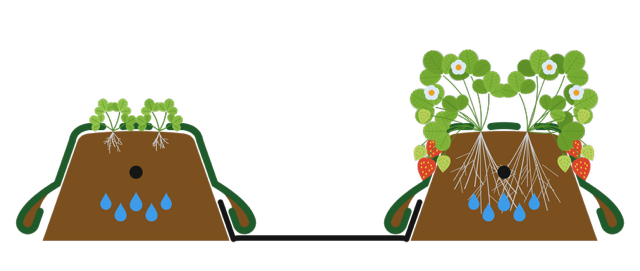
Topsoil dam strawberries double-row
Strawberries
Topsoil dam strawberries double-row
Facts
- Row spacing 1.35 m
- 7,400 lm (running metres) per hectare
- Same row spacing, same track widths, same machines as the double-row substrate dam
Benefits
- Film and Mypex can be reused for approx. 6 years
- Quick and trouble-free removal of the film thanks to the winding technique
- The field is not overgrown with weeds after harvest
- No straw needed
- No herbicide use
- Clearly earlier harvest, by approx. 10 days, compared with conventional open-field cultivation with straw
- Best picking performance and fruit quality
- Highest yield per ha
Comparison: topsoil dam vs. open-field cultivation (standard)
| Topsoil dam | Open-field cultivation | |
|---|---|---|
| Planting date | 8 May | 5 May |
| Start of harvest | 20 June | 25 June |
| Other | Extreme early-harvest effect | Plants suffer severe stress from weather conditions |
Frequently asked questions
- Does the topsoil dam need straw or herbicides?
- No. Between the dam rows there is Mypex fabric instead of straw, which reliably suppresses weeds – entirely without herbicides. On the dam, a pocket film protects the plants. Buying, storing, spreading and distributing straw by hand is no longer necessary.
- How many plants fit on one hectare?
- With the double-row topsoil dam (row spacing 1.35 m), up to 60,000 strawberry plants per hectare are possible – up to 50% more than in conventional cultivation.
- How much earlier can you harvest with the topsoil dam?
- In a practical comparison with standard open-field cultivation, the planting date for the topsoil dam was 8 May (open field: 5 May), but the start of harvest was 20 June (open field: 25 June). Without straw, the dam warms up faster in spring, and the plants also dry faster after rain – which means less fungal infestation.
- How long do the pocket film and the Mypex fabric last?
- Both last approx. 6 years. The pockets filled with soil fix the film to the dam and, at the same time, the Mypex between the rows – without an additional work step. After the one-off investment there are no more annual costs.
- How is the topsoil dam irrigated?
- A drip hose under the pocket film supplies every plant directly at the root. The film prevents evaporation, and rainwater seeps through the Mypex between the rows and returns to the dam through the capillary action of the soil.
- Is the topsoil dam more expensive than conventional cultivation?
- In our experience there are no additional costs compared with conventional cultivation: the pocket film and Mypex are bought once and used for approx. 6 years, and straw and herbicides are no longer needed.
- How high must the polytunnel be for the tractor?
- Where the tractor drives, the tunnel must be at least 3 m high.
- How must the soil be prepared before the dams are formed?
- The soil must be loosened and mixed well to a depth of at least 25 cm – ideally first ploughed, then cultivated with a wing-share cultivator. It must be free of stones and coarse plant residues such as asparagus roots or maize stalks. The dams can be formed well before the planting date.
Contact
Do you have questions or are you interested in our cultivation methods? Call us directly or send us a message. We look forward to your enquiry!
Get in touch now